Table of Contents
Why Chatbots Are the Talk of Every Digital Marketer
Imagine this: a potential consumer goes to your website at midnight, looks at your services, and then departs since no one is available to answer their enquiries. That’s not a problem with traffic. That’s a gap in the conversation.
Customers today want quick answers, personalised interactions, and pleasant experiences on all channels, all the time. This is where chatbot tools for digital marketing come in. They don’t get weary of answering the same questions over and over again, and they never miss leads.
Chatbots can be your most reliable digital marketing assistant, no matter if you own a startup, an eCommerce company, or a service-based firm. In this article, we’ll talk about the most important chatbot tools for growing your digital marketing business. We’ll explain how they operate, provide you with examples of how they can be used in the real world, and show you how to use them well to get leads, get more people to interact with your content, and make more sales.
You’ll know which chatbot solutions are best for your business goals by the end, and you’ll know how to get started with them.
What Are Digital Marketing Chatbot Tools?
A Beginner’s Guide to Chatbots
A chatbot is a piece of software that uses AI or rules to mimic human communication through text or voice. Chatbots are used in digital marketing to get people to visit websites, answer questions, gather leads, qualify prospects, and help them go through the sales funnel.
A marketing chatbot for businesses is like a virtual sales and support person that works around the clock on websites, WhatsApp, Facebook Messenger, Instagram, and more.
Different kinds of chatbot tools
Not all chatbots do the same things. Knowing the different types will help you pick the correct one:
- Chatbots that follow rules
Follow scripts and decision trees that have already been set up. Best for frequently asked questions and simple interactions.
- Chatbots that use AI
Use NLP and machine learning to figure out what someone wants and answer in a smart way.
- Chatbots that are a mix of both
Use rules and AI together to make talks more flexible and ready to grow.
Why Chatbot Tools Are Important for the Growth of Digital Marketing
How Customers Are Changing
Customers today would rather text than fill out forms, send emails, or call. They expect answers quickly and without any problems. Chatbots are exactly what people want.
Important Reasons Why Chatbots Are Necessary
- Make the time it takes to respond zero
- Get visitors interested right away
- Automatically get leads
- Make user journeys unique
- Make customers happier
- Scale up marketing without hiring more people
In short, chatbot tools for digital marketing enable firms achieve more with less while giving customers better experiences.
Important Chatbot Tools for Growing Your Digital Marketing
The following are the most crucial types of chatbot tools that any digital marketer should think about.
1. Chatbot Tools for Websites
Chatbots on your website are generally the first way that people interact with your brand.
What They Do
- Say hello to visitors first
- Answer questions that come up often
- Help people find items or services
- Get in touch with people
Example from the real world
A SaaS business puts a chatbot on its pricing site. The chatbot asks instead of letting users leave with questions:
“Searching for the appropriate plan? How many people are on your team?
This simple interaction makes more people book demos and lowers the number of people who leave the site.
Best Uses
- Websites for services
- Pages that people land on
- SaaS platforms
- Capture leads from your blog
2. Chatbot for collecting leads online
Lead generation is one of the best ways to use chatbots.
How Chatbots Help You Get More Leads
Old-fashioned forms are monotonous and take a long time. Chatbots convert collecting leads into a conversation.
In place of:
“Complete this form with seven fields”
You get:
“Can I help you find the best answer? What do you call yourself?
Pros
- More people finishing forms
- Higher quality leads
- Qualification in real time
- Integration of CRM without any problems
Example Situation
A digital marketing business utilises a chatbot to ask visitors
- Type of business
- Monthly budget for ads
- Objectives
The sales staff only gets leads that are qualified, which saves time and boosts conversions.
3. Chatbot Tools for Social Media
Customers already spend time on social media. Chatbots help brands stay consistent and responsive.
Supported Platforms
- Facebook Messenger,
- Instagram DM,
- WhatsApp Business, and
- Telegrams are all examples of
Marketing use cases
- Automatic response to questions
- Send catalogues of products
- Run campaigns that people may take part in
- Get leads from adverts
Sample
A Facebook ad for an eCommerce brand has a “Send Message” call to action. The chatbot right away:
- Says hello to the user
- Shows different choices for products
- Shares codes for discounts
- Gathers phone numbers
This cuts down on ad drop-offs and raises ROI.
4. Chatbots for WhatsApp Marketing
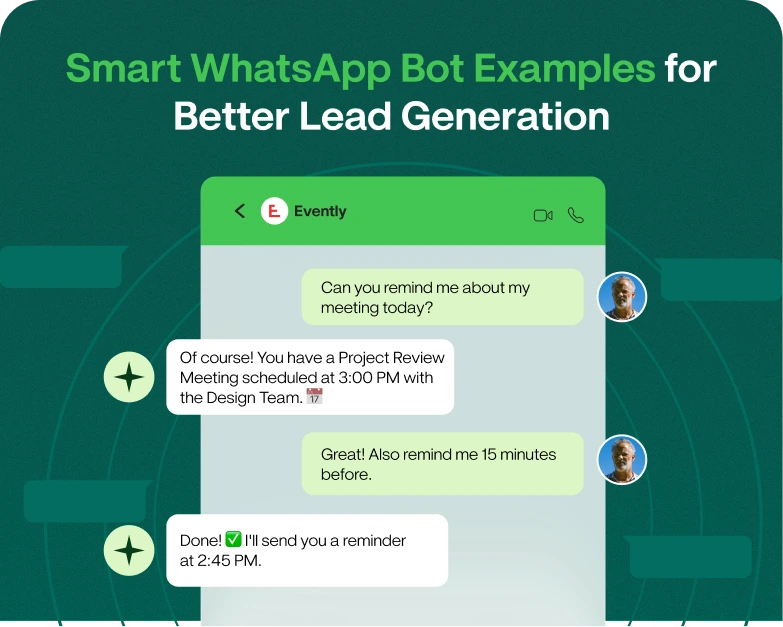
WhatsApp has one of the highest percentages of people opening messages in digital marketing. Chatbots make it even better.
What WhatsApp Chatbots Can Do
- Send follow-ups automatically
- Give updates on orders
- Respond to common questions
- Get back lost carts
What Makes Them Strong
- More than 90% of messages are opened.
- Very personal communication
- A platform you can trust
Example of how to use it
A real estate company employs a WhatsApp chatbot to:
- Give information about the property
- Set up site visits
- Answer enquiries about prices
This makes the sales cycle a lot shorter.
5. Chatbot tools that use AI
AI chatbots are made to comprehend what people want, not simply the words they use.
Main Features
- Understanding natural language
- Conversations that take context into account
- Getting better through interactions
- Responses that are tailored to you
When to Use AI Chatbots
- Websites with a lot of traffic
- Difficult questions from customers
- People who speak more than one language
- Customer involvement that may grow
For example
An AI chatbot on an online education site suggests courses based on:
- Goals of the user
- Level of skill
- Money
This makes things better for users and increases enrolment rates.
Step by step, how to use chatbot tools to make your marketing work
Step 1: Set a goal
Think about this:
- Do I want more leads?
- Do I want better help?
- Do I want more conversions?
The strategy for the chatbot depends on what you want to achieve.
Step 2: Pick the Right Platform
Make sure your chatbot fits in with your audience:
- Website → Chatbot on the web
- Ads on social media ← Messenger/Instagram bot
- Follow-ups on sales → WhatsApp chatbot
Step 3: Plan the flow of the conversation
Keep talking:
- Short
- Kind
- Focused on goals
Use buttons, rapid replies, and clear calls to action.
Step 4: Connect with marketing tools
Link chatbots to:
- Systems for CRM
- Tools for email marketing
- Platforms for analytics
This makes sure that lead management goes well.
Step 5: Test, look at, and improve
Keep track:
- Rates of engagement
- Points of drop-off
- Rates of conversion
Make conversations better by looking at how real users act.
The Advantages of Using Chatbot Tools in Digital Marketing
Quick Look at the Main Benefits
- Available 24/7: so you never miss a lead
- Cost-effective: Cut down on sales and support work
- More engagement: conversations work better than forms
- Personalization: customized answers build trust
- Scalability: Be able to handle thousands of users at once
In summary, marketing chatbots for businesses help brands develop smarter, not harder.
Things You Shouldn’t Do When Using Chatbots
- Asking users too many questions at once
- Sounding like a robot or a sales pitch
- Not paying attention to human handoff choices
- Not changing the flows of chatbots often
- Using chatbots without a clear plan
A chatbot should be like a helpful advisor, not a pushy salesperson.
FAQs: Important Chatbot Tools for Online Marketing
1. Are chatbot tools good for small businesses?
Yes. Many chatbot technologies are cheap and simple to set up, which makes them perfect for small and medium-sized organisations.
2. Can chatbots take the role of human support teams?
Chatbots don’t completely replace people; instead, they take care of simple jobs so that human teams may work on more difficult ones.
3. Can a chatbot help with B2B marketing?
Yes, for sure. Chatbots are great for qualifying leads, setting up demos, and keeping B2B prospects interested.
4. How long does it take to have a marketing chatbot up and running?
It only takes a few hours to put up a basic chatbot. It may take a few days to make advanced AI chatbots work better.
5. Do chatbots aid with search engine optimization?
Yes, in a way. Chatbots are good for SEO because they increase user engagement, lower bounce rates, and make the user experience better.
Final Thoughts: Are Chatbot Tools Worth It?
Chatbots are one of the best tools for digital marketing nowadays since they let you reach the right people at the right time with the correct message. These chatbot tools for digital marketing and collecting leads online help organisations connect, convert, and grow without putting too much stress on their staff or finances.
Are you ready to move on?
Start looking at chatbot tools that are made for your business. Try out a chatbot on your website or WhatsApp. Make interactions turn into sales.
If you want to learn more about marketing automation, lead generation, and growth methods, sign up for our blog or contact our team now.