In today’s fast-paced digital environment, people expect you to answer right away, not only as a bonus. But let’s be honest: personally responding to every WhatsApp message, sending follow-ups, reminders, and promotional updates may take up a lot of your time and energy. You’re not the only one who has forgotten to send a message, missed a follow-up, or wished you could message customers at the right time without having to do anything.
This is when scheduling WhatsApp messages really makes a difference.
This detailed tutorial will teach you what it means to schedule WhatsApp messages, how it works, why it’s important for businesses, and how you can use it to save time and make more sales without sounding like a robot or spam.
Table of Contents
What does it mean to set up WhatsApp messages?
Scheduling WhatsApp messages implies making messages ahead of time that will be sent automatically at a certain date and time. You don’t have to send messages by hand anymore. You plan them once, and a WhatsApp message scheduling application sends them for you at the proper time.
These messages that are set to go out can include:
- Sales offers
- Confirmations of orders
- Reminders to pay
- Reminders for appointments
- Messages to follow up
- Wishes for a birthday or anniversary
WhatsApp reminder messages help you stay professional and consistent without having to put in extra work, whether you’re a small business owner, a marketer, a sales team member, or a customer care manager.
Why WhatsApp Is a Great Way for Businesses to Talk to Customers
Before we get into scheduling, it’s crucial to know why WhatsApp is so critical for sales and engagement
- Important WhatsApp Stats
- More than 90% of WhatsApp messages get opened.
- Most people read texts within a few minutes.
Customers like WhatsApp better than calls or emails for quick communication.
WhatsApp is more personal, direct, and conversational than email marketing. It develops trust and gets people to act faster when utilized effectively
Why it’s important to schedule WhatsApp messages
Sending messages by hand could work if you don’t have many customers. But when your organisation grows, sending messages by hand becomes less effective and more likely to go wrong.
Here’s why it’s important to schedule WhatsApp messages:
- Saves time by sending the same message over and over again
- Makes follow-ups and campaigns more consistent
- Sends messages at the right time to improve the customer experience
- Increases revenue and conversions
- Cuts down on missed messages and reminders that are forgotten
In brief, scheduling allows you to focus on strategy and growth while automation takes care of everyday communication.
Advantages of Planning WhatsApp Messages for Sales and Marketing
1. Save Hours of Work by Hand
You only have to type the same message once, not again and over. This is really useful for:
- Offers every day
- Campaigns every week
- Reminders to pay every month
2. Always Follow Up
People lose a lot of deals only because they forget to follow up. With WhatsApp messages set up:
- Leads get timely pushes
- Customers feel important
- Sales cycles becoming shorter
3. Send Messages at the Right Time
Timing is important. A scheduled message makes sure your message gets to customers:
- During normal business hours
- At periods of greatest engagement
- Right before an offer ends
4. Boost the number of sales that happen
WhatsApp reminder messages that come at the right time, like:
- “Your cart is waiting”
- “Last day to get your discount”
- “Your demo is set for tomorrow.”
can make conversion rates go up a lot.
5. Create a professional image for your brand
Well-written, automated messages make your firm look organised, trustworthy, and focused on the customer.
Some common reasons to schedule WhatsApp messages are
Here are some real-life situations where scheduling makes a major difference:
Online Stores
- Messages to confirm orders
- Updates on delivery
- Reminders for abandoned carts
- Announcing sales during the festival
Businesses that provide services
- Reminders for appointments
- Follow-ups for service
- Requests for feedback
Teaching and Coaching
- Reminders for class
- Alerts for paying fees
- Notifications for exams
Teams for Real Estate and Sales
- Follow-ups for leads
- Reminders for site visits
- Give updates
A Step-by-Step Guide to Scheduling WhatsApp Messages
WhatsApp doesn’t officially let normal accounts schedule messages. That’s why companies use WhatsApp message scheduler tools like the WhatsApp Business API.
Step 1: Pick the Best WhatsApp Message Scheduler Tool
Find a tool that has:
- Integration with the WhatsApp Business API
- Scheduling messages is easy
- Integration with contacts or CRM
- Automation and customisation
- Following WhatsApp’s rules
Step 2: Make a template for your message
Your message should be:
- Clear and to the point
- Personalised (use name, order ID, etc.)
- Not salesy, but conversational
For example:
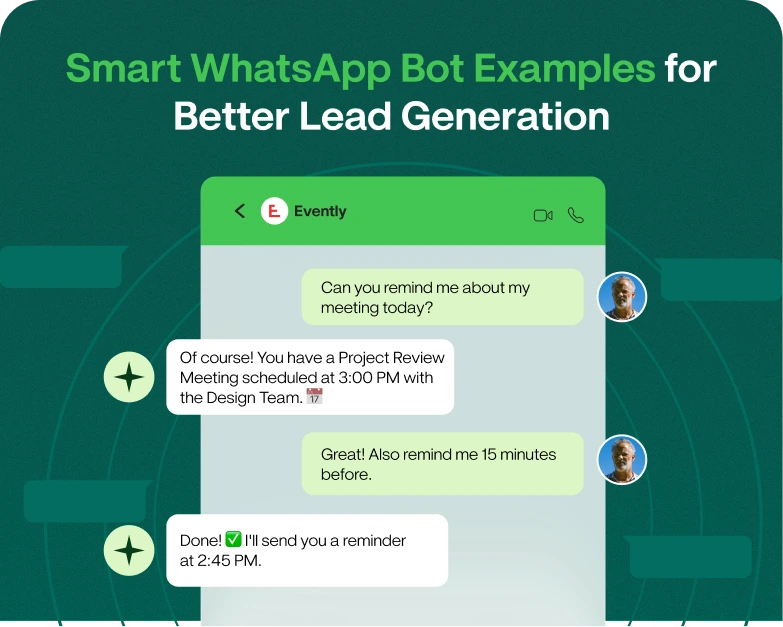
Hey {{Name}}, Just a quick note to remind you that your meeting with us is tomorrow at 11 AM. Please reply YES to confirm.
Step 3: Choose who will get it
Pick:
- Personal contacts
- Groups of customers
- Lists of leads
Segmentation makes it easier to send messages that are more relevant.
Step 4: Set the date and time
Choose the exact time and date the message should go out. A lot of tools let you:
- Scheduling only once
- Messages that come back
- Triggers based on events
Step 5: Look over and turn on
Before you activate the schedule, make sure your message, timing, and audience are all correct.
How to Schedule WhatsApp Messages the Right Way
Keep these tips in mind to get the best results:
Make sure your messages are short and clear
WhatsApp is not the same as email. Stick to messages that are short and to the point.
Make it personal whenever you can
- Use things like name, location, or order information.
- Don’t spam
- Don’t send too many messages. Quality is more important than quantity
Respect Opt-Ins
Send messages just to people who have said it’s okay.
Keep an eye on performance
Keep an eye on delivery rates, answers, and conversions to make future campaigns better.
How scheduling helped sales in the real world
Situation:
A local fashion brand has trouble with abandoned carts and not many repeat transactions
Solution:
They set up WhatsApp reminders to go out at certain times:
- Reminder to check your cart after 2 hours
- Reminder for a discount after 24 hours
- Message about new arrivals every Friday
The results are:
- 35% more carts recovered
- 25% more people bought again
- 60% less work for people to do by hand
This shows that even minimal automation can have an effect that can be measured
Things You Shouldn’t Do
- Sending texts at strange times
- Using information that seems robotic and generic
- Not responding to consumer emails
- Promoting too much without giving anything in return
WhatsApp is a way to talk to people, so use it like one.
How to Schedule WhatsApp Messages
1. Is it possible to schedule WhatsApp messages right from WhatsApp?
No. WhatsApp doesn’t have built-in scheduling. You need a third-party program to schedule WhatsApp messages or the WhatsApp Business API.
2. Is it safe to schedule WhatsApp messages?
Yes, as long as you use official tools that respect WhatsApp’s opt-in and messaging rules.
3. Is it possible to set up WhatsApp reminder messages?
Of course. Appointment reminders, payment reminders, and follow-ups are some of the most typical uses.
4. Do scheduling WhatsApp messages help you sell more?
Yes. Reminders, follow-ups, and offers that come at the right time greatly boost engagement and conversions.
5. Is it okay for small firms to use WhatsApp to plan things?
Of course. Scheduled communications may help even small organisations save time and look more professional.
In the end, automate wisely and talk to each other more
It’s no longer just a “nice-to-have” to be able to schedule WhatsApp conversations; it’s a smart business decision. You save time, make fewer mistakes, and reach consumers at the perfect time by automating reminders, follow-ups, and campaigns.
When used wisely, WhatsApp message scheduling feels personal, helpful, and human, and it works silently in the background to enhance your sales.